Interview: Sangham Founder Christelle Meunier
"Our Album Deals With Animal Exploitation, Our Relationship With Otherness, Domination, and the Violence We Are Capable of Inflicting on the Most Vulnerable"

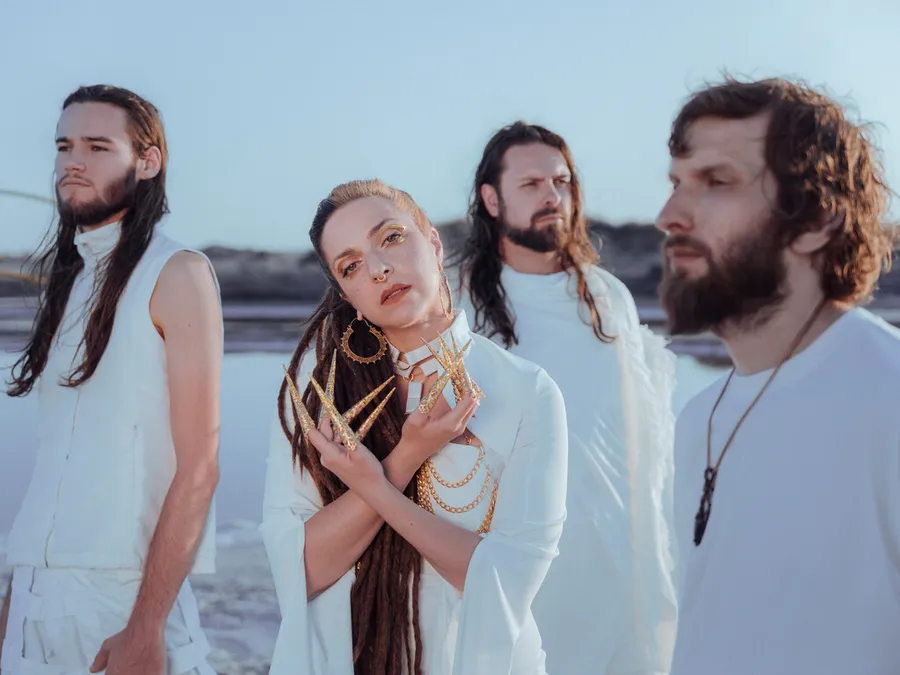
The last thing I expected on a quiet Tuesday morning in May was a message that stopped me in my tracks. I felt a rush of surprise and curiosity when I noticed that Christelle Meunier, lead singer of the French metal band Sangham, had written to me directly. She wanted to share a new song and music video about animal exploitation. She found Sounds Vegan because, as she put it, it is rare to come across creators who combine music and veganism. I have to admit: I reread her message in disbelief, feeling both validated and connected. I have run this magazine for nearly two decades, stubbornly believing in that combination. Now, here was someone in Marseille, making heavy music, who felt the same way. Over the years, I have had the privilege of interviewing and meeting many vegan artists through Sounds Vegan, and that never stops feeling like a gift. But finding someone whose convictions run this deep, and whose music carries them so directly and unapologetically, still catches me off guard in the best possible way.
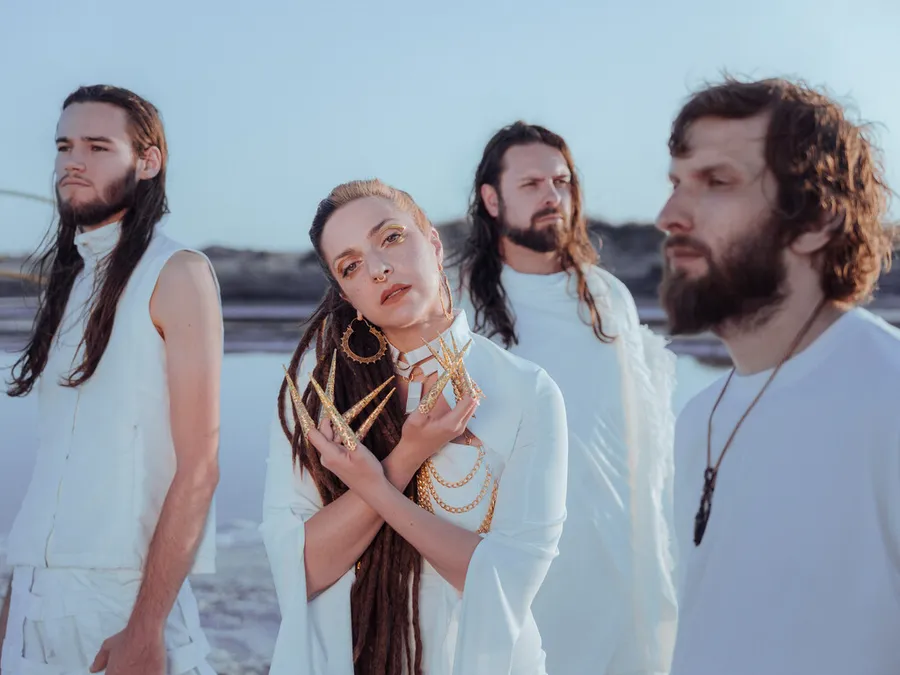
Christelle and guitarist and singer Cyril Lhuillier founded Sangham in 2020. Blending modern metal, Djent, progressive metal, and death metal influences, the band crafts a sound that is both organic and uncompromising. Their debut album, "Intangible", arrived in November 2021 via KLONOSPHERE and was distributed by Season of Mist. The album is quietly philosophical. It has a pensive and contemplative tone as it explores humanity's fragile relationship with its world. Their second album, "The Radiant Crown", is due November 5th, 2026 and marks a shift to a heavier, darker mood. It is more direct and confrontational. It addresses feminism, animal rights, overconsumption, and the belief in humanity's own supremacy over all living beings. The first single from "The Radiant Crown", "Listen", released in February 2026, introduces this urgent energy.
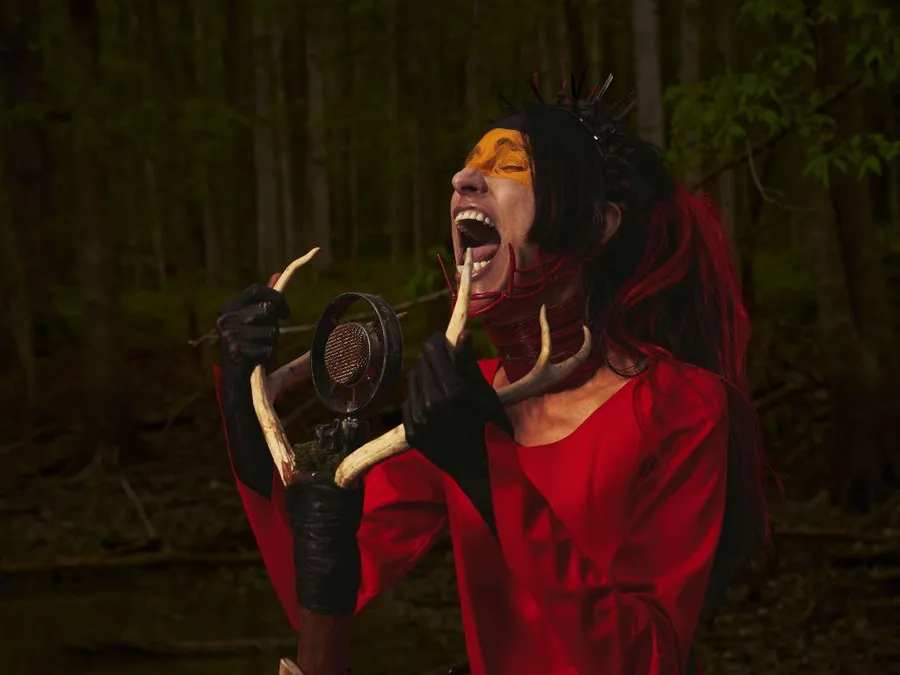
In May, "Our Vain Pleasure" followed as the second single. Its music video emotionally immerses the viewer in the harrowing experience of an exploited animal, confronting them with unflinching cinematic intensity. What I love about this band in particular is that its commitment is tangible. They organise solidarity concerts for farm animal sanctuaries and donate proceeds from merch sales to anti-speciesist organisations. Their passion for these causes is sincerely felt and evident in every aspect of their work. I had the opportunity to ask Christelle some questions about the album, her band, and her engagement within the animal rights movement. Please enjoy my interview!
Anne: Hi, Chris! How are you doing today? I'm so excited to get to know you! How is your day going so far?
Chris: Hi Anne! It's a pleasure to be able to chat with you. Things have been pretty busy lately, between my day job and the recent release of our new single with the band.
I'm really happy that we can talk about both music and the values we share. Thank you for the valuable work you do with Sounds Vegan. It's important for animals, of course, but also for artists who are trying to bring these issues to life through their art.
Anne: "Our Vain Pleasure" is narrated entirely from the perspective of the exploited being, from birth to slaughter. That is a very deliberate and uncomfortable creative choice. What does it take, emotionally, to write and then perform a song from that perspective night after night?
"I wanted to enable listeners to identify with exploited beings"

Chris: I wanted the listener to be able to identify directly with the victim, who is ultimately not so different from us. We are all sentient animals, with our own subjectivity, personality, and self-awareness. Adopting this perspective felt like the most honest way to highlight a reality that is so often overlooked.
Writing the song was emotionally challenging because it forced me to imagine what it means to experience absolute vulnerability. It wasn't just about denouncing an injustice; it was about trying to feel what it means to be born, live, and die within a system that sees you as nothing more than a production machine.
On stage, this is probably the song that demands the most emotional investment from me. I introduce it with a short spoken text to provide some context and invite the audience to listen more attentively. When I perform it, I try to channel as much vulnerability as I do anger.
Anne: Your twin sister Elise Meunier 1, who also directed "Vertigo" back in 2023, directed the music video for "Our Vain Pleasure". How did the creative process behind the video develop, and how do you make sure a visual concept stays powerful without becoming exploitative or gratuitous?
Chris: Working with Elise has always felt completely natural. Beyond our personal bond, she has a unique ability to translate our music into images, often coming up with ideas we would never have thought of ourselves. She intuitively understands our artistic universe while also bringing a valuable outside perspective.
For "Our Vain Pleasure", she was the one who came up with the idea of creating an immersive experience. We wanted something direct enough to confront viewers with the reality of animal exploitation, but without falling into gore, voyeurism, or sensationalism.
It was also important for us to include the real victims in the story. We chose to show actual footage through a cathode-ray television screen. This creates a certain distance while still preventing us from looking away from reality. The screen also evokes surveillance footage, becoming a silent witness to acts of cruelty that, while deeply disturbing, are sadly considered ordinary in our society.
Olivia, the lead actress, brought an additional emotional dimension through the intensity and sincerity of her performance. She never tries to literally portray an animal; instead, she conveys universal emotions such as fear, distress, and confusion in the face of violence. When we saw the final result, it immediately felt like the right choice.
I think the strength of the video comes precisely from that balance. We wanted to show enough that the message could not be ignored, while still leaving room for the viewer's imagination and emotional response. To me, that's what allows the video to raise awareness rather than simply seek to shock.
Anne: Since when have you been vegan, and who or what first inspired you to make that change?
"I went vegan ten years ago"

Chris: I stopped consuming animal products a little over ten years ago. The decision came from a very simple realisation. One day at lunch, I was sitting in front of my plate when it struck me that I would never have been capable of killing any of the animals I had eaten throughout my life.
From that moment on, I completely stopped eating meat and began a long process of learning through books, documentaries, and personal testimonies. Everything I have discovered since then has only reinforced my conviction that I made the right decision. Looking back, it is probably one of the best decisions I have ever made.
Anne: As a vegan, would you say that writing and performing music about animal exploitation feels like a natural extension of how you already live, or does it take you to places emotionally that even daily activism cannot reach?
Chris: I would say it's a way of connecting what drives me and what I know how to do with my deepest convictions. Music is my language, and Sangham allows me to give a voice to the issues that matter most to me.
I believe that all forms of activism are complementary. I have a great deal of respect for people who are active on the ground on a regular basis, such as the volunteers of Anonymous for the Voiceless or, here in France, L214. As for me, I hope to touch people's hearts and inspire reflection through a form of political poetry.
Anne: With the release of "Our Vain Pleasure", your band is also selling an exclusive T-shirt with part of the proceeds going to FUTUR, an anti-speciesist organisation. Why FUTUR specifically, and what does it mean to you to make merch something that actively funds the cause rather than just promoting the band?
Chris: Supporting FUTUR felt like a very natural choice. I've been working there as a Community Manager and graphic designer for several months now, and I wanted my creativity and commitment to contribute to the organisation beyond my professional role. I'm especially grateful to them for giving me the opportunity to do work that aligns with both my values and my skills.
I also know exactly where the donations go, and I have a great deal of admiration for the people on our team. Whether it's caring for the sanctuary animals, raising awareness, conducting investigations, or organising vegan events across France, everyone is incredibly dedicated to what they do.
The idea of creating a design specifically dedicated to the animal cause was also very exciting. It allows us to express Sangham's values while giving the people who wear it a way to proudly express their own.
Anne: "The Radiant Crown" takes on overconsumption, patriarchal domination, animal suffering, and humanity's rupture from the living world, all on one record. How do you hold all of that together and still make something that feels like music first, rather than a statement?
"We want people to feel something"
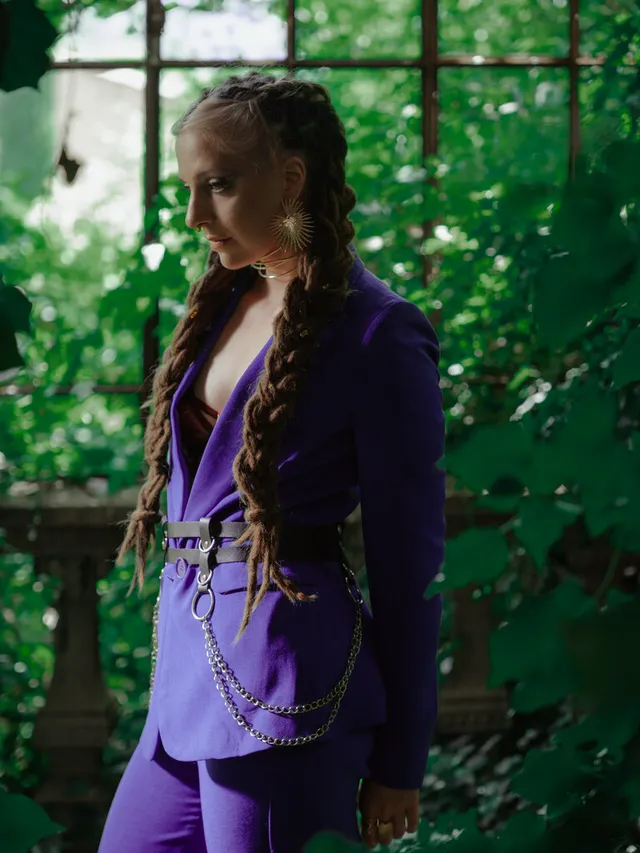
Chris: Through our music, we are not trying to convince people at all costs; first and foremost, we want them to feel something. For us, music is an emotional language long before it becomes an argument.
We've also noticed that by standing at the crossroads of two worlds—metal and political engagement—we are able to reach people who identify with one of those spheres without necessarily being familiar with the other. Some people discover our convictions through our music, while others discover metal through our convictions!
Anne: You described the central image of your album as a dual symbol, the sun and the virus. This reflects the constant tension between creation and destruction. The crown itself represents humanity's self-proclaimed reign over all living beings. That is a deeply critical image of where we are. But where does hope live in this record for you?
Chris: I believe that simply exposing and bringing certain realities into the light is already an act of hope. It is often the first step toward questioning what we take for granted. Songs can also bring together people who share similar values, remind them that they are not alone, and show that music can be a space where they feel represented.
That being said, I think we need to remain clear-eyed about the world we live in. One of the key references behind the album is the famous line from The Matrix that compares humanity to a virus unable to find balance with its environment. It's an image that challenges the way we relate to the living world and our tendency to treat growth, domination, and exploitation as if they were natural or inevitable.
Human beings are capable of both the best and the worst, and unfortunately, our times give us plenty of reasons to be concerned. But for me, hope does not lie in denying that reality. It lies in our ability to face it, question it, and imagine other ways of inhabiting the world. Art is part of that process. It cannot change the world on its own, but it can create cracks in our certainties and help transform a sense of powerlessness into reflection, or even action.
Anne: Your debut album "Intangible" came out in November 2021 on KLONOSPHERE with distribution through Season of Mist, which is a significant platform for a debut record. Was there ever a tension between the artistic freedom you needed and the expectations that come with a label release, especially now that the second album is considerably more uncompromising?
Chris: When we signed with KLONOSPHERE, "Intangible" had already been written and composed. As a result, the question of compromising our artistic vision never really came up.
Today, we are releasing "The Radiant Crown" independently, which allows us to maintain complete creative freedom and remain fully in control of our artistic choices.
Anne: "Listen", the lead single from "The Radiant Crown", deals with illness, pain, and self-acceptance. A deeply personal theme. "Our Vain Pleasure" then turns outward to systemic violence against animals. Is that sequence, from inward to outward, the emotional architecture of the whole album?
"The purpose of our album is to open up a broader reflection of how we relate to illness, suffering and death"

Chris: It wasn't consciously designed as an emotional progression from the personal to the collective. In fact, although "Listen" stems from a deeply personal experience, its purpose is to open up a broader reflection on how we, as human beings, relate to illness, suffering, and death.
In the same way, "Our Vain Pleasure" deals with animal exploitation, but it also explores our relationship with otherness, domination, and the violence we are capable of inflicting on the most vulnerable. The album's themes are diverse, but they are connected by shared questions and concerns rather than by a deliberate progression from the intimate to the collective.
Anne: Your third single, "Reclaim", is still to come before the album drops. Without giving too much away, what can you tell us about where it sits within the emotional journey of "The Radiant Crown"?
Chris: "Reclaim" is both a tribute to and an anthem for ecofeminism. In this song, I explore the ability of women to transform their vulnerabilities into strength, as well as their capacity to create, resist, and reinvent themselves. These are all powerful resources that enable us to fight back, support one another, and build a deep sense of sisterhood.
Anne: Metal has a complicated relationship with feminist and anti-speciesist politics. The scene can be incredibly welcoming and incredibly hostile at the same time. Has Sangham's political dimension ever created friction with venues, promoters, other bands, or audiences, and how do you handle that?
Chris: For now, even though we don't necessarily feel that our values generate any particular enthusiasm among venues or promoters, we have generally been very well received everywhere we play. So far, we haven't encountered any real opposition within the live music scene.
It's mostly on social media that the divide becomes apparent. The more openly we embrace our convictions, the wider the audience we reach, but we also attract more criticism and more trolls. That's simply part of the game, and in a way, it also helps sort things out!
Anne: You opened for Black Bomb A in April 2026 at Jas'Rod, a band with a long history of political and environmental engagement. What does it mean to share a stage with artists whose commitment feels genuinely aligned with your own, rather than just stylistically compatible?
Chris: It was definitely a pleasure to share the stage with a band that fully embraces the political dimension of its music. I actually find it quite surprising that, in some corners of the metal scene, part of the audience claims to be apolitical when art has always been a way of expressing a worldview, values, or social concerns.
Artists have the ability to convey messages, whether those messages are explicit or not. Personally, I enjoy seeing bands use that freedom to stand up for ideas they genuinely care about. It's sometimes fascinating to observe the reactions this can provoke, as if some people expect music to be nothing more than entertainment disconnected from reality. Yet the works that leave the strongest impression on me are often those that challenge, unsettle, or encourage reflection.
Anne: Djent and progressive metal are genres that have historically been very male-dominated and very technically focused, sometimes at the expense of emotional directness. How consciously do you work against those conventions, and what does it mean to you personally to be making music this political in a genre that often keeps politics at arm's length?
"Sangham was never about technical prowess"
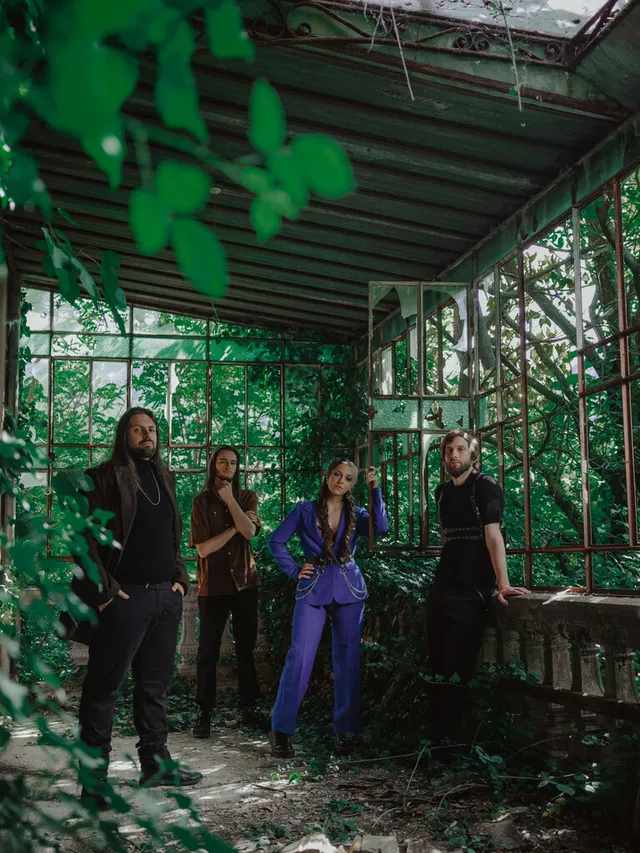
Chris: Sangham has never aspired to be a band built around technical prowess. Cyril, who writes all of our music, composes primarily from the heart. He has no formal musical training, and his approach has always been deeply intuitive, resulting in songs that feel both rich and personal.
We immediately connected through that approach, and we've never had any difficulty bringing his compositions together with the lyrics I write. For us, technique is never an end in itself; it's simply a tool in the service of emotion.
That being said, progressive song structures are particularly interesting to us. They allow us to create contrasts, build tension, and take the listener on an emotional journey through different moods and dynamics within the same song.
Anne: If someone comes to your show having never given a single thought to animal exploitation, and they leave having felt something shift, even slightly, what is the one idea you most want them to carry home?
Chris: I would like them to leave with the understanding that animals are not resources to be exploited, but sentient beings with their own subjectivity and their own experience of the world.
Most of us would never put a knife to the throat of a cat or a dog. So why do we accept doing the same to a pig, a chicken, or a cow? To me, that difference in treatment is rooted entirely in a speciesist view of the other beings with whom we share this world.
Anne: If there was one thing in the world you could change, what would it be and why?
Chris: I think I would reshape a world that is still largely dominated by a small number of men and by inherited power structures. In my view, many of the forms of violence we inflict on others (whether against women, minorities, animals, or the living world as a whole) stem from deeply rooted systems of domination.
I would like to live in a world that places greater value on empathy, cooperation, and care for others. I genuinely believe that minorities, animals, and ultimately society as a whole would be better off if we learned to extend more consideration and compassion to those who are different from us!
Anne: "The Radiant Crown" will be released on November 5th, preceded by several singles. You've been building live momentum with Sangham throughout this year. What does the rest of 2026 look like for you? Where do you want this band to be when the album cycle is over?
Chris: For the second half of 2026, we will be focusing our energy on the release of the album and on booking shows for the 2027 season. The singles we are releasing now are helping us reintroduce ourselves after the hiatus caused by our line-up changes and present this new incarnation of Sangham.
The music videos also play an important role. They are valuable tools that will help us reach out to festivals during the next booking season. Our goal is simple: to bring "The Radiant Crown" to as many stages as possible and share it with the widest possible audience.
Anne: Christelle, thank you so much for taking the time to answer all of these questions. It means the world to me. Please do keep me posted on everything that is coming, and I wish you and the whole band the very best of luck with "The Radiant Crown" and all your plans ahead!
Chris: Thank you so much. The work you do is truly valuable. I'm really happy to have had the opportunity to answer your questions and to exchange thoughts on these issues that are so close to our hearts!