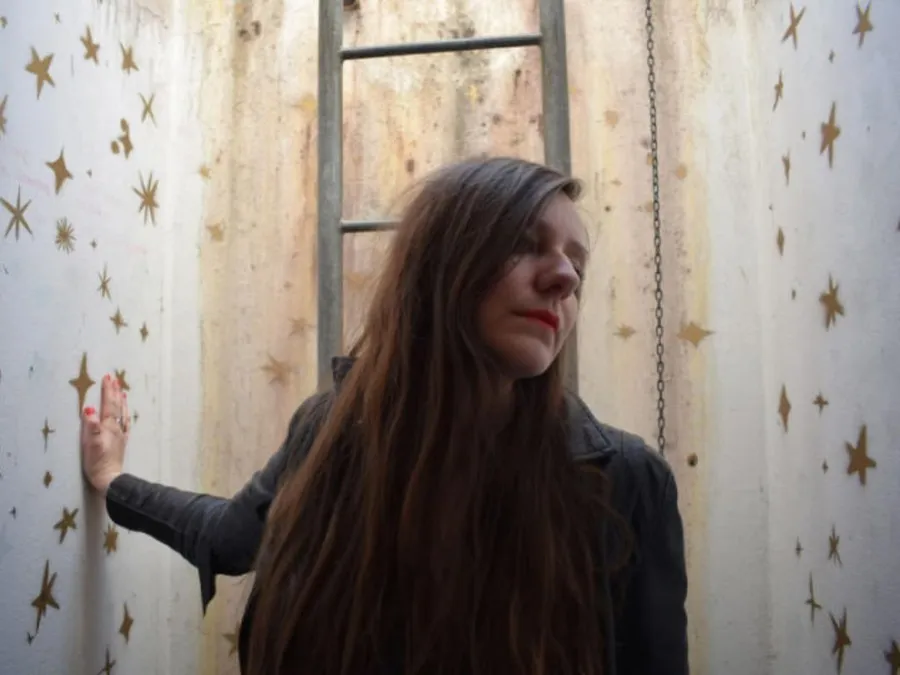
Tracy Bryant About The New Album, "The Well"
"I've always been drawn to heavier lyrics set to pretty music"

Do you remember the last time a song made you cry? Not from sadness exactly, but from the overwhelming truth of it? That peculiar feeling when music reaches somewhere so specific and personal that you wonder how a stranger could possibly know? Caution: Tracy Bryant's new album, "The Well", out on May 22nd 2026, via Taxi Gauche Records, may do that to you before you've even finished the first listen.
Tracy wrote The Well in one of the most intense periods of his life. His father passed away unexpectedly in 2022, and just three months later, he and his wife welcomed their first child. Two of the biggest things that can happen to a person had arrived almost simultaneously. He processed all of it at the piano, largely alone during the pandemic, and brought the songs to Studio 22 in Cypress Park, where producer Joo-Joo Ashworth captured them on half-inch tape.
Grief and new life, neither cancelling the other out. The opening track of the record, "Cold Floor", dropped first, and it tells you everything you need to know:
"It's an old road to a small door you know / A farewell on a cold floor."
Tracy Bryant writes about the day his father died, directly and without softening it. The piano keeps moving beneath it, almost breezy, and that contrast captures the whole album in miniature. And that's another thing that makes "The Well" special: Tracy changed the lead instrument from guitar to piano, creating an entirely new atmosphere, style, and narrative. I had the chance to ask some questions about making this album. Please enjoy my interview!
Anne: "Cold Floor" opens the album with "a farewell on a cold floor". That's a very specific image. Did you know from the start that this song had to be first?
Tracy: "Cold Floor" was the very first song we recorded for this album. Once everything else came together, it just felt like a perfect opener, being that this song has a bit of a different vibe than the rest of the songs. It also thematically sort of sets the tone for the rest of the album. It didn't seem like it fit in anywhere else.
Anne: The piano carries the whole record. Was there a moment when you realised the guitar simply wasn't the right instrument for what you needed to say?
"Writing songs on piano was also just more of a challenge and exciting"

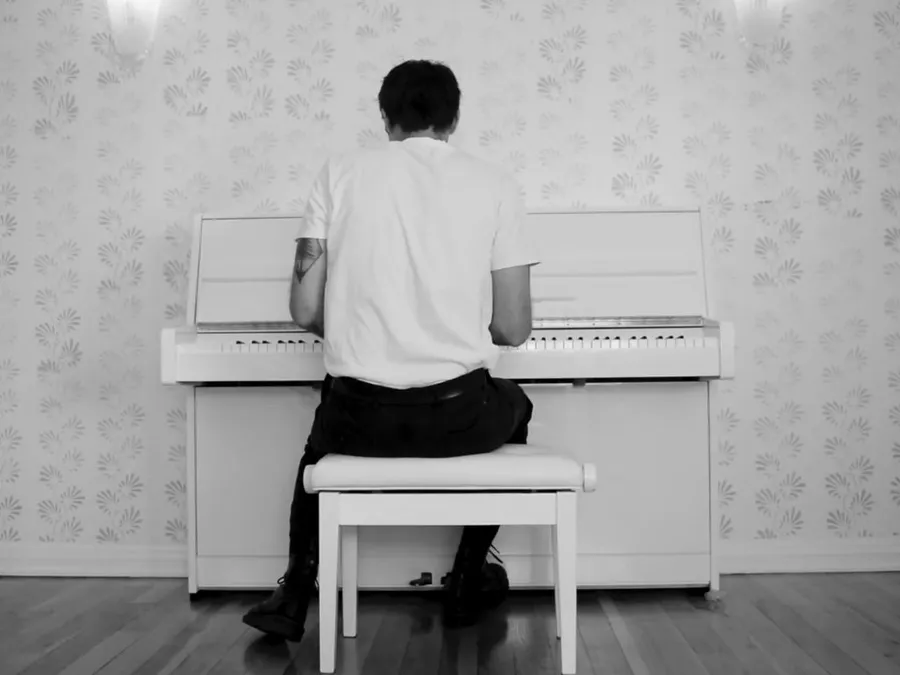
Tracy: It wasn't so much about using the piano opposed to guitar to get a lyrical point across, it just materialized in that way after we acquired our upright piano in 2020. Writing songs on piano was also just more of a challenge and exciting opposed to mostly writing on guitar, which I've done on the three prior albums.
Anne: A motorik pulse drives most of the album, something almost relentless about it. For a record dealing with grief, that feels like a deliberate choice. Was it?
Tracy: It was deliberate, as was everything that ended up on these songs. Cameron Gartung (who played the drums) came up with a lot of these beats that just suited the songs without too much talk about it. We've played together a long time, and he is really good at playing whatever suits the song. When we were recording the songs in the studio with Joo-Joo, it made the most sense to have these drums feeling icy and heavy, which does go hand in hand with the subject matter.
Anne: The album title comes from a poem by Kimberly Fitzner. When did you know that was the right title? What does "the well" mean to you in the context of these songs?
"The Well" has multiple meanings: a dark place where you can hide things, or a place where things are stored that you pull from"
Tracy: "The Well" is a poem that Kim wrote and read at my fathers' funeral. It felt like the right title for this album. "The Well" has multiple meanings…a dark place where you can hide things or, in the case of a water well—a place where things are stored that you pull from.
Anne: "Weight", "Widow", "Danny", "Halfway". Those are quite loaded titles. Did they appear to you before you wrote the music or after?
Tracy: The titles came after the music. I actually recorded the last vocal line to the song "Widow" after the fact in order to make that the theme/title of the song.
Anne: "Cold Floor" opens the album with this light and beautiful piano. And then the words: "a farewell on a cold floor", written about this sad day in your life. So, the music and the lyrics are doing two completely different emotional things at once. Was that contrast and tension something you planned, or did it only emerge in the studio?"
Tracy: I've always been drawn to heavier lyrics set to pretty music. This maybe comes from listening to so much Elliott Smith in my formative years. The contrast and tension was most definitely planned.
Anne: You recorded on half-inch tape with Joo-Joo Ashworth. What does tape do to this kind of music that's already quite sparse and precise?
Tracy: Recording on tape was Joo-Joo's idea—I think he normally does that. It definitely fills the empty spaces and gives some warmth and character to everything.
Anne: You co-wrote "Famished" and "Easy Street" with Joo-Joo, and your wife, Kimberly, also contributed to "Easy Street". What does collaboration look like on a record this personal?
Tracy: On "Famished" we had the song recorded, but the guitar lead was missing. The song sounded great, but it did feel like something was needed. Joo-Joo took it upon himself one day to plug in his guitar and try things out for a couple of hours. He sent me the song with that riff and I loved it. He based the guitar riff off of the melody happening halfway through the opening verse. The lead became not only a major part of the song, but also of the album, since it is the only guitar lead that is so prominent.
Anne: On "Easy Street" I had been playing and working out the song at home on piano. My wife (Kim) was singing along the line "Something's got to give" after my vocal verse. After hearing that, I couldn't get it out of my head, and it had to become part of the song, which actually is a large part, finishing off most of the vocal lines. Therefore, it ended up in the final version.
Tracy: The Well moves between more driving tracks like "Weight" and "Widow" and quieter ones like "Halfway" and "Danny". Did the order fall in place naturally?
"We were never just recording individual songs without thinking of them as part of an entire album"

had quite a few iPhone recordings that I showed Joo-Joo each session, and we would decide which ones to record, usually doing the majority of one song each day. Once we had seven songs or so, we were choosing the songs like "Danny" and "Halfway" that would balance out the more driving tracks to give a sort of balance and dynamic to the album. We were never just recording individual songs without thinking of them as part of an entire album.
Anne: You wrote this album during the pandemic. Only you and your piano. How much of that isolation is still audible in the finished record?
Tracy: I'm not sure the isolation was there for me either then or now. I live with my wife and our 1st daughter was born in April of 2022, so there were always people around. Writing songs can be rather solitary, pandemic or not, and once I began meeting up with Cameron Gartung (who played drums), the songs really began to feel fully realised and take shape.
Anne: You've mentioned Vince Guaraldi and Arthur Russell as influences on The Well. They're both piano-centred, but otherwise very different. What was it exactly about them that pulled you in while making this record?
Tracy: I was searching out different piano-based music to pull from in my approach to making these songs. Vince Guaraldi uses his left hand to create baselines that are sometimes out of the box and interesting. Arthur Russell is maybe less piano-centric, but nonetheless somewhat unconventional in his songwriting, and not entirely guitar -based.
Anne: Dave Cooley mastered the record at Elysian Masters. At what point in the process did the album start sounding like the thing you'd heard in your head, and how did it feel to listen to the first mastered song?
Tracy: I first met Dave in 2014 when he mastered Corners' "Maxed out on Distractions". He's unparalleled in his mastering, and I've gone to him with nearly everything I've released since then. The mixes sounded great already, but working with Dave over the years, I already had an idea of how they would be after he mastered them.
Anne: It's been seven years since "Hush". How does it feel to finally put this one out into the world?
"It feels good to be back in the world I feel most comfortable in."
Tracy: It feels good to be back in the world I feel most comfortable in. One of the highlights of releasing new music for me is re-connecting with friends I have that I've met around the world on past tours and travels.
Anne: What's up next?
Tracy: We're in the middle of moving our family abroad, so once we're settled, I'm planning to have more time for writing and touring in the near future.
Anne: Thank you very much for answering my questions! All the best for the release and your plans!