"Being Vegan Completely Changed My Life"

HamaSaari's Jordan About Progressive Rock and Veganism
Anne

Interview von Anne
30.04.2026 — Lesezeit: 13 min

Deutsche Version lesen

"Being Vegan Completely Changed My Life"
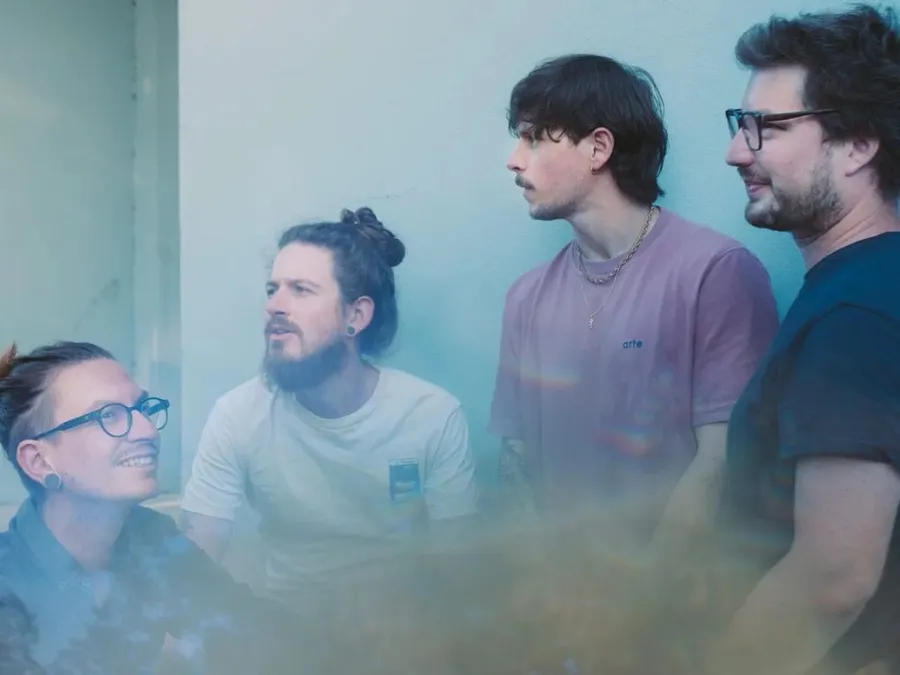
Bild/Picture: © HamaSaari

Founded in 2021, HamaSaari from the Nantes/Les Mans region bring together Jordan Jupin on vocals and guitars, Axel Vaumoron on guitars, Jonathan Jupin on bass, and Élie Chéron on drums. The band released their debut album, "Ineffable", on 3 March 2023 via Klonosphere Records, and followed it up with their second record, "Pictures", at the start of 2026. I had the chance to speak with Jordan about music, life, and his decision to live it as a vegan. The outcome isn't just an interview. It is a reminder that the values running through HamaSaari's music, sensitivity, intention, and a certain quiet awareness of the world, shouldn't be forgotten in our day-to-day lives. And they are by no means at odds with playful and progressive music

HamaSaari are the architects of a sound that is vast and intricate, carrying the spirit of progressive rock in everything they do. Drawing on the influence of acts like Porcupine Tree, and Karnivool, they shape their music with care and precision, guiding the listener through an experience that is as sensory as it is musical. Rising from the dissolution of Shuffle, HamaSaari have found their own voice in something quieter and more melancholic. Their music moves like a gathering storm, conjuring images of rain breaking across a dark and clouded sky, before settling, finally, into something that feels like hope.

"We want to focus on what truly matters"

Anne: Hi Jordan! How are you doing today? Thanks for taking the time!

Jordan: Hi Anne, I'm doing really well, thanks. I hope you're doing well, too. Thanks for taking the time to speak with us. Thanks for sharing your time with us.

Anne: HamaSaari emerged from the ashes of Shuffle. What felt different this time, and what does the new name mean to you personally?

Jordan: With HamaSaari, we wanted to get back to the source, to focus on what truly matters. What drives us? Simply playing music with deep sincerity.

The name is inspired by the Finnish hämärän saari, which means "twilight island": the moment between light and darkness, and vice versa.

Anne: Your new album, "Pictures", is out. Congrats on that! Can you walk

me through the creative process? Was there a specific moment where you knew: this is the album we need to make right now?

Jordan: Thank you! We're really happy!

We jammed and shared some ideas and inspirations. The goal was never to limit ourselves, but to explore things in different ways.  Playing together as much as possible to capture the atmosphere.

We have the chance to be able to work at my home, set up as a vintage studio.

In the living room with all the mics on the instruments, we recorded every session and then selected the best takes to shape the arrangements.

Anne: You said your sound is "a tide of raindrops culminating in a halo of hope", and I think that describes it very well. How deliberately do you build that emotional arc? Is it something you map out, or does it emerge in the studio?

"We didn't want to overthink things"

Jordan: I think it comes from this long creative process. We tried not to overthink things and instead explored all possible combinations. Sometimes, we just felt when it was the right one. Then we added some arrangements to make the harmony and rhythm clearer, while keeping a structure that helped us let go and stay out of our heads.

Anne: Progressive rock feels like a genre that demands a lot of patience,

both from the musicians making it and the listeners receiving it. What does that slow, deliberate pace of creation mean to you, and how does it shape the way HamaSaari writes?

Jordan: Yes, the goal is to be free from rules. So we explore many different directions to find the right vibrations and feelings.

We want to play music that touches the deeper part of ourselves. So we have to go beyond the shallowness.

Anne: Are there lyrics or sonic moments on your new album that you'd consider the most personal thing you've ever put out?

Jordan: We don't know if it's personal, and maybe we just imagine that we're singing with a voice coming from within.

We don't care about what or who "we are" in this process. Maybe just the guys who play the music with their hearts.

It might sound paradoxical, but in the end, the stories we tell are not only our own. It's also maybe why we're sharing them.

Anne: We met over the vegan topic. Since when have you been a vegan? How would you describe this moment in your life? Was it more like a turning point or a longer process?

Jordan:  I've been vegan since 2020, and the guys are veggies. It all started in 2018 with a friend (Dimitri from my other band, Could Seed) who cooked vegan food at home and showed us how. Thanks also to the rising awareness about the truth behind our plates. It completely changed my life and my way of cooking. At first, I wasn't very organised and wasn't ready to accept all the changes, but gradually I became fully vegan and discovered a lot of new recipes (smiles).

Anne: What does a typical day on the road actually look like for you, foodwise?

Do you have any survival strategies or unexpectedly great discoveries you want to share?

Jordan: On the road, we always carry a bag with bread, hummus, fruits,

vegetables, nuts, dried tomatoes. Anything we could find to help us

to picnic at noon in a beautiful place where the weather is on our side. We try to find local shops or bakeries to pick up nice things to eat when we have time to walk around. If we have a long drive, we stop at supermarkets like Aldi or Lidl. It's industrial, but we always find everything we need. 

At night, most of the time we eat a warm meal at the venue, or we find a restaurant. Sadly, because of lobbyists and 'traditions', local food often revolves around meat and cheese. But fortunately, there's always a vegan option in Lebanese, Greek or Ramen restaurants, for example, and in Germany or the Netherlands it's really easy. People forget how easy vegan food is to cook.

Anne: Does veganism influence how you engage with the music industry itself? I mean in terms of merch choices, touring logistics, working with labels, and so on.

"We want to be respectful to all living beings"

Jordan: I don't know, we've always been very aware of all these things. Avoiding plastic and being as respectful as we can to animals, the environment, and people. Talking to and supporting locals, trying new things—rather than just following what TV tells us to. We just do our best to find cool stuff, and we like it!

Anne: The progressive rock is known for its pretty devoted fan base, but it's also not always the most openly political or values-driven scene. Have you ever felt out of place bringing your vegan ethics into that space?

Jordan: Yes, sailing with the pirate flag is not always easy.

We've noticed that in the music industry and in the world in general, people claim banners that don't apply to themselves. And a lot of people don't want to change their "traditions". We can say that it's better now than some years ago, and a lot of organisers cook vegan, and try to prevent abusive behaviours. In that sense, we're glad to see things changing.

Anne: A lot of people who follow bands closely end up reconsidering their own lifestyle choices because of an artist they admire. How does it feel when fans tell you that you inspired them to go vegan?

Jordan: That's perhaps one of the best things we could hear. We play

music to share a positive spirit. Of course, it's also about trying to change what

is dark into light. Peace & love is the message. We feel good when people understand this philosophy, especially in a world where TV news and Hollywood films often promote war, hatred, violence, sexism, and consumerism.

Anne: In my interview with Crippled Black Phoenix, Justin Greaves told

me that being vegan comes up as a topic on tour almost every single day—and that people are always curious, but that once you're gone, most of them push the thought away again. Do you recognise that pattern? And what do you think it actually takes to move someone from "I'm curious" to "I'm doing it"?

Jordan:  You can't force change through a conversation, and I admit it took me a long time to change myself on this subject. I think we carry the legacy of a violent history of domination, and we need to accept letting that part of us go. Many people are so attached to what they call "me" that it becomes impossible to make a real choice.

Anne: Back to the music: HamaSaari's sound is described as both massive and delicate. How do you hold those two things in tension without one swallowing the other, especially live?

"We need to learn to live with our neighbours"

Jordan: Our tastes in music are really contrasted. These contrasts open gates between dimensions (smiles). We love how music can grab and transport you.

Anne: What do you hope people are still carrying with them six months after hearing "Pictures" for the first time?

Jordan: The father of my partner recently told me that he did not feel so well and have troubles to sleep. He told me that he spent time listening to the album during the night, felt happy and was able to sleep again. This album is the best gift we can offer. We just hope that people can use it to feel well.

Anne: If there was one thing in the world that you could change. What would it be and why?

Jordan: A lot of things (laughs). We still need to learn to live with our neighbours. Maybe our fears are here to understand things and turn inward, rather than hold us down.

If people could take the time to breathe, instead of fighting each other over external ideologies or "traditions", we'd be less likely to fall into the trap that lobbyists and politicians set for industrial profit. It's all connected.

Anne: Thank you very much for answering my questions! It was a pleasure talking to you!

Jordan: Thank you, Anne. I feel honoured to have the chance to share our feelings and music. Take care!
Founded in 2021, HamaSaari bring together Jordan Jupin on vocals and guitars, Axel Vaumoron on guitars, Jonathan Jupin on bass, and Élie Chéron on drums. The band released their debut album, "Ineffable", on 3 March 2023 via Klonosphere Records, and followed it up with their second record, "Pictures", at the start of 2026. I had the chance to speak with Jordan about music, life, and about his decision to live it as a vegan. The outcome isn't just an interview. It is a reminder that the values running through HamaSaari's music, sensitivity, intention, a certain quiet awareness of the world, shouldn't be forgotten in our day-to-day lives. And they are by no means at odds with playful and progressive music

HamaSaari are the architects of a sound that is vast and intricate, carrying the spirit of progressive rock in everything they do. Drawing on the influence of acts like Porcupine Tree, and Karnivool, they shape their music with care and precision, guiding the listener through an experience that is as sensory as it is musical. Rising from the dissolution of Shuffle, HamaSaari have found their own voice in something quieter and more melancholic. Their music moves like a gathering storm, conjuring images of rain breaking across a dark and clouded sky, before settling, finally, into something that feels like hope.

"We want to focus on what truly matters"

Anne: Hi Jordan! How are you doing today? Thanks for taking the time!

Jordan: Hi Anne, I'm doing really well, thanks. I hope you're doing well too. Thanks for taking the time to speak with us. Thanks for sharing your time with us.

Anne: HamaSaari emerged from the ashes of Shuffle. What felt different this time, and what does the new name mean to you personally?

Jordan: With HamaSaari, we wanted to get back to the source, to focus on what truly matters. What drives us? Simply playing music with deep sincerity.

The name is inspired by the Finnish hämärän saari, which means "twilight island" : the moment between light and darkness, and vice versa.

Anne: Your new album, "Pictures", is out. Congrats on that! Can you walk

me through the creative process? Was there a specific moment where you knew: this is the album we need to make right now?

Jordan: Thank you! We're really happy!

We jammed and shared some ideas and inspirations. The goal was never to limit ourselves, but to explore things in different ways.  Playing together as much as possible to capture the atmosphere.

We have the chance to be able to work at my home, set up as a vintage studio.

In the living room with all mics on the instruments, we recorded every session and then selected the best takes to shape the arrangements.

Anne: You said your sound is "a tide of raindrops culminating in a halo of hope", and I think that describes it very well. How deliberately do you build that emotional arc? Is it something you map out, or does it emerge in the studio?

"We didn't want to overthink things"

Jordan: I think it comes from this long creative process. We tried not to overthink things and instead explore all possible combinations. Sometimes, we just felt when it was the right one. Then we added some arrangements to make the harmony and rhythm clearer, while keeping a structure that helped us let go and stay out of our heads.

Anne: Progressive rock feels like a genre that demands a lot of patience,

both from the musicians making it and the listeners receiving it. What

does that slow, deliberate pace of creation mean to you, and how does it shape the way HamaSaari writes?

Jordan: Yes, the goal is to be free from rules. So we explore many different directions to find the right vibrations and feelings.

We want to play music that touches the deeper part of ourselves. So we have to go beyond the shallowness.

Anne: Are there lyrics or sonic moments on your new album that you'd

consider the most personal thing you've ever put out?

Jordan: We don't know if it's personal, and maybe we just imagine that we're singing with a voice coming from within.

We don't care about what or who "we are" in this process. Maybe just the guys that play the music with their hearts.

It might sound paradoxical but in the end, the story we told are not only our own. It's also maybe why we're sharing them.

Anne: We met over the vegan topic. Since when have you been a vegan? How would you describe this moment in your life? Was it more like a turning point or a longer process?

Jordan:  I've been vegan since 2020 and the guys are veggies. It all started in 2018 with a friend (Dimitri from my other band Could Seed) who cooked vegan food at home and showed us how. Thanks also to the rising awareness about the truth behind our plates. It completely changed my life and my way of cooking. At first, I wasn't very organised and wasn't ready to accept all the changes, but gradually I became fully vegan and discovered a lot of new recipes (smiles).

Anne: What does a typical day on the road actually look like for you, foodwise?

Do you have any survival strategies or unexpectedly great discoveries you want to share?

Jordan: On the road we always carry a bag with bread, humus, fruits,

vegetables, nuts, dried tomatoes. Anything we could find to help us

to picnic at noon in a beautiful place where the weather is on our side. We try to find local shops or bakeries to pick up nice things to eat when we have time to walk around. If we have a long drive, we stop at supermarkets like Aldi or Lidl. It's industrial, but we always find everything we need. 

At night, most of the time we eat a warm meal at the venue, or we find a restaurant. Sadly, because of lobbyists and 'traditions', local food often revolves around meat and cheese. But fortunately, there's always a vegan option in Lebanese, Greek or Ramen restaurants, for example—and in Germany or the Netherlands it's really easy. People forget how easy vegan food is to cook.

Anne: Does veganism influence how you engage with the music industry itself? I mean in terms of merch choices, touring logistics, working with labels, and so on.

"We want to be respectful to all living beings"

Jordan: I don't know, we've always been very aware of all these things. Avoiding plastic and being as respectful as we can to animals, the environment, and people. Talking to and supporting locals, trying new things—rather than just following what TV tells us to. We just do our best to find cool stuff and we like it!

Anne: The progressive rock is known for it's pretty devoted fan base, but it's also not always the most openly political or values-driven scene. Have you ever felt out of place bringing your vegan ethics into that space?

Jordan: Yes, sailing with the pirate flag is not always easy.

We've noticed that in the music industry and in the world in general, people claims banners they don't apply to themselves. And a lot of people don't want to change their "traditions". We can say that it's better now than few years ago and a lot of organisers cook vegan and try to prevent abusive behaviours. In that sense, we're glad to see things changing.

Anne: A lot of people who follow bands closely end up reconsidering their own lifestyle choices because of an artist they admire. How does it feel when fans tell you that you inspired them to go vegan?

Jordan: That's perhaps one of the best things we could hear. We play

music to share a positive spirit. Of course, it's also about trying to change what

is dark into light. Peace & love is the message. We feel good when people understand this philosophy, especially in a world where TV news and Hollywood films often promote war, hatred, violence, sexism, and consumerism.

Anne: In my interview with Crippled Black Phoenix, Justin Greaves told

me that being vegan comes up as a topic on tour almost every single day—and that people are always curious, but that once you're gone, most of them push the thought away again. Do you recognize that pattern? And what do you think it actually takes to move someone from "I'm curious" to "I'm doing it"?

Jordan:  You can't force change through a conversation, and I admit it took me a long time to change myself on this subject. I think we carry the legacy of a violent history of domination, and we need to accept letting that part of us go. Many people are so attached to what they call "me" that it becomes impossible to make a real choice.

Anne: Back to the music: HamaSaari's sound is described as both massive and delicate. How do you hold those two things in tension without one swallowing the other, especially live?

"We need to learn to live with our neighbours"

Jordan: Our tastes in music are really contrasted. These contrasts open gates between dimensions (smiles). We love how music can grab and transport you.

Anne: What do you hope people are still carrying with them six months after hearing "Pictures" for the first time?

Jordan: The father of my partner recently told me that he did not feel so well and have troubles to sleep. He told me that he spent time listening to the album during the night, felt happy and was able to sleep again. This album is the best gift we can offer. We just hope that people can use it to feel well.

Anne: If there was one thing in the world that you could change. What would it be and why?

Jordan: A lot of things (laughs). We still need to learn to live with our neighbours. Maybe our fears are here to understand things and turn inward, rather than hold us down.

If people could take the time to breathe, instead of fighting each other over external ideologies or "traditions", we'd be less likely to fall into the trap that lobbyists and politicians set for industrial profit. It's all connected.

Anne: Thank you very much for answering my questions! It was a pleasure talking to you!

Jordan: Thank you, Anne, I feel honoured to have the chance to share our feelings and music. Take care!
HamaSaari feat. Christelle Ratri – "Frames"

HamaSaari réinvente la puissance en douceur dans Les Sessions Olinfact

HamaSaari – "Bleak"

HamaSaari – "Crumbs"

HamaSaari – "Lost in Nights"

HamaSaari – "Pictures"

Interessante Beiträge

Kategorien & Stichworte