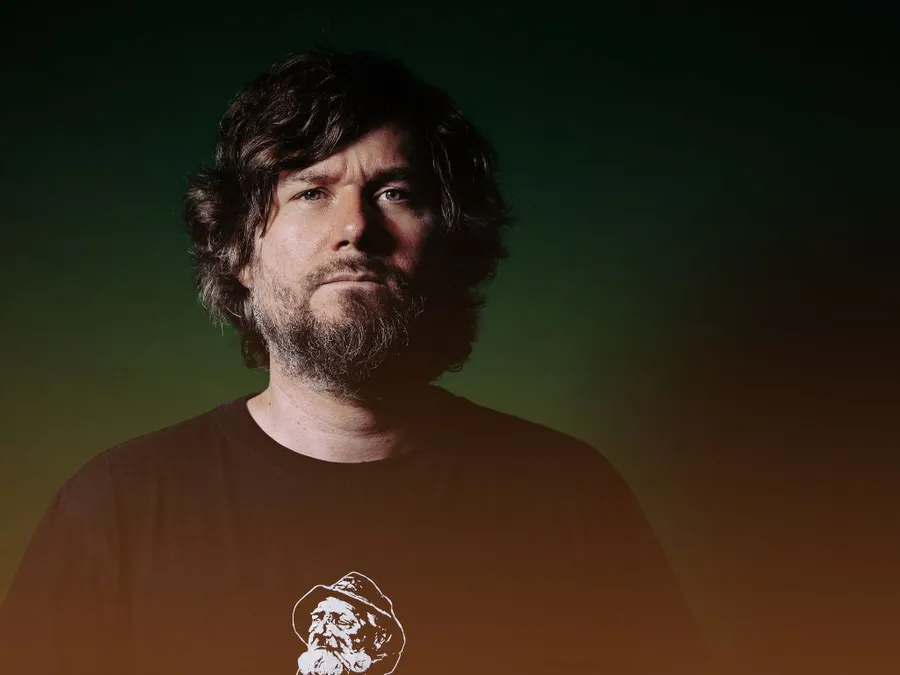
"Human Arrogance Is Solely a Source of Conflict and Unnecessary Destruction"
Velcro Dog on "Fjord Noir": Depression, Dark Humour and the Dogs Who Never Leave Our Side
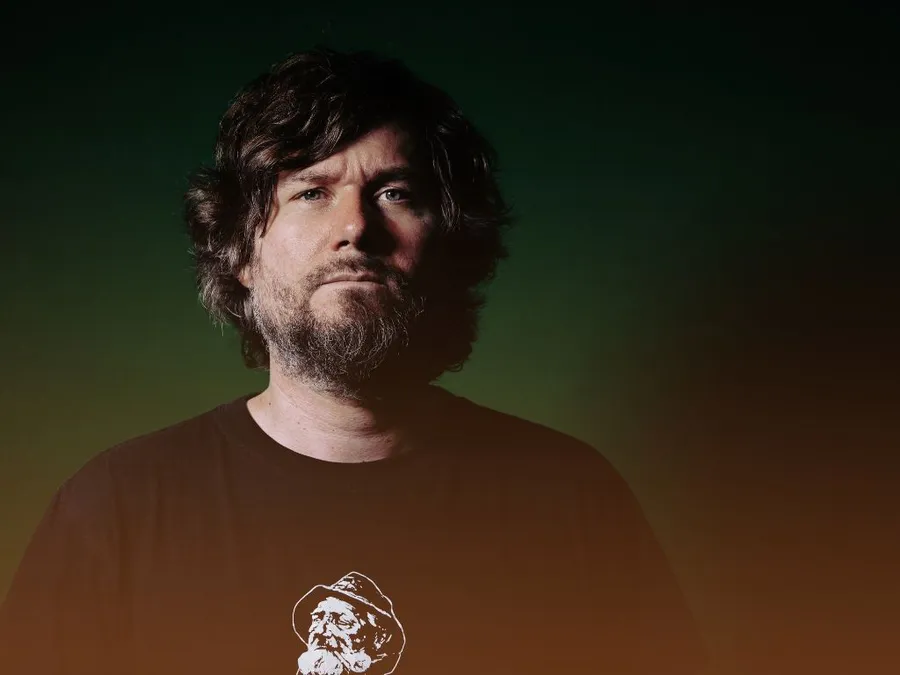
Some albums about hard years try to tidy them up. "Fjord Noir" does something braver. Tony Gonzalez, aka Velcro Dog, spent two genuinely difficult years writing this second album, and rather than smoothing the darkness over, the songs sit with it, honestly and without flinching. What surprised me was how much room there still is for warmth, and for the kind of dark humour that reaches toward people instead of away from them.
Some of you might already know songwriter Tony Gonzalez from his other projects, Barren Womb, Oma Desala or Twin Serpent. His solo project Velcro Dog grew out of a need to face old and new ghosts, and it has been wandering through the shadowy edges of folk, Americana, and country ever since. I came in a little cautious, the way I often am with records described as "dark and mellow", quietly bracing for something that keeps the listener at arm's length. This one does the opposite. Tony built a whole genre for it, fjord noir, then filled it with cello, choirs and an openness about mental health that feels like an invitation rather than a performance.
I interviewed him, and we talked about trusting family enough to hand them the camera for a song this personal, about caring for a partner who is usually the one holding you up, about swapping a lifelong CD collection for the raw pull of vinyl, and about a world that might be gentler with less human arrogance. My own dog stayed for the whole conversation, which felt about right. Please enjoy my interview!
On September 3, Velcro Dog released the new song "I'll Stick to Fiction" on Westergaard Records, which is the third single from his upcoming sophomore album "Fjord Noir".
Anne: Hi! How are you doing today? Thanks for taking the time for this chat!
Tony: The pleasure is all mine. It's a real treat being interviewed by you.
Anne: Your new video is a real family affair. Your partner, your nephews and your in-laws filmed the colourful clips, while you appear alone in black and white, playing multiplayer board games with yourself. How did it feel to hand the camera to the people closest to you for a song about depression and missing out on life?
Tony: It's been very difficult for me to open up to the people closest to me about my inherent darkness, but one of the most important purposes of Velcro Dog is precisely transparency around mental health. Therefore, it is quite symbolic that my extended family shot the happy, colourful parts of the video, while I am featured in the more dour scenes.
Anne: "Fjord Noir" started out as a playful label for your sound, and now it has become the title of your second album. What does it mean to you to name a whole record after a genre you basically invented for yourself?
Tony: Coming primarily from rock and metal, I'm not exactly well-versed in Americana, folk and adjacent genres, so it felt a bit insincere to try to shoehorn my music into these grand traditions. To get around the problem, I opted to create my own label instead that was fitting for dark and mellow coastal music. The Velcro Dog sound has now started to feel enough like its own thing that calling the album "Fjord Noir" seemed like the right thing to do.
"The purpose of writing songs was simply to try to heal"

Anne: You wrote "Fjord Noir" during a two-year period marked by deteriorating mental health. Was there a moment during those two years when you realised that these songs were becoming an album, and did that realisation help you?
Tony: I seem to always set out with a goal of creating an album, which is a byproduct of being both a dreamer and long-term planner, but the process is a lot less calculated than what one might think. In this instance, the purpose of writing songs was simply to try to heal through a lot of negative emotions and wounds from the past. When I had about a handful of songs, I started mapping out an album from there.
Anne: There is a love letter to Trondheim on the album, even though you originally come from Narvik. What is it about Trondheim that made you want to write it a love letter in the middle of all that darkness?
Tony: Trondheim is a place with a truly feisty personality. It's intense, wild and unpredictable, often cycling through all four seasons within the span of half an hour. Also, it is one of Norway's largest cities, yet it still manages to feel intimate and welcoming. Simply put, to me, there is no place in the world that is as beautiful as Trondheim.
Anne: Compared to your stripped-down debut "Misanthropology", the new album features choirs, strings and cello arrangements by Live Sunniva Smidt. How did you decide how big these songs could get without losing the intimate Velcro Dog atmosphere?
Tony: I always gravitate towards composing and arranging in a minimal fashion, so I don't obscure the core idea of a given piece with unnecessary clutter. I knew I wanted strings on this album to give it a more cinematic feel, so throughout the writing process I carefully earmarked the songs that could benefit from this treatment. I then handed that batch of songs over to Live so she could work her magic with as little interference from me as possible.
Although I had never worked with Live before, I knew what she was capable of, and the cello arrangements she came up with totally blew my mind. They elevate the songs so much yet subtract nothing from the intimacy of the material. Her talent is planet-sized (at least), and I'm so grateful for her contributions on this album.
Anne: "Stranded on Trash Island" is such a striking title. My imagination immediately started showing me pictures. Do you want to tell me the story behind this song?
Tony: The title is an homage to Wes Anderson's "Isle of Dogs", an absurd movie where all Japanese dogs are exiled to a dumpsite called "Trash Island".
A few years back, my partner, my rock, was really struggling under the weight of her own black clouds, leaving me to care for the one who is always there for me. The song is basically about what happens when your rock hits rock bottom.
"Where depression seeks isolation, humour seeks connection
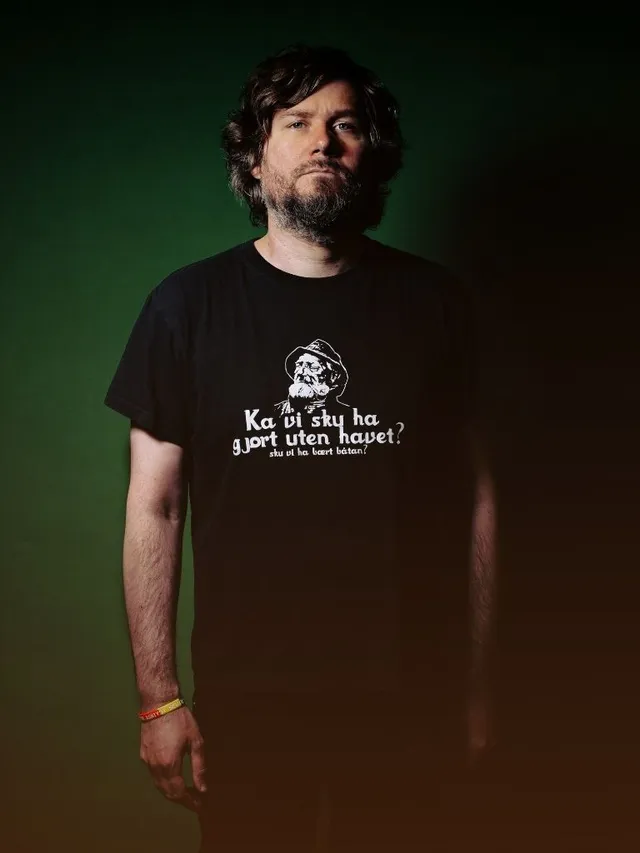
Anne: Your latest press text notes that, despite everything, there is room for dark humour on "Fjord Noir". Where exactly should we listen for it, and how important is humour for you when writing about heavy topics?
Tony: I think a well-placed pun or a bit of wordplay is absolutely crucial for disarming heavy topics like the ones I write about. Where depression seeks isolation, humour seeks connection, so it really is a terrific way for me to glue these gloomy fragments together. There are spatterings of dark humour all throughout the album, but "Concrete Kisses", "Thirteen to the Dozen" and "The Gonzo Futurist Manifesto" might be a bit heavier on the light-heartedness than the rest.
Humour is also an important part of my live show, where I use it between songs to keep the general ambience a couple of notches above full-blown funeral.
Anne: Between Barren Womb, Twin Serpent, Oma Desala and Velcro Dog, you cover a lot of very different musical ground. When you wake up in the morning, how do you know which of these projects a new idea belongs to?**
Tony: All of the projects I'm involved in are really different from one another (noise rock, country punk, downtempo electronica), with very little overlap between them. This luckily makes the task of deciding which ideas go where pretty easy and intuitive.
Anne: You called your project Velcro Dog, and there's a song called "Cone of Shame" on your debut. I have to ask this for my dog sitting here next to me: is there a real dog behind these references, and what role do animals play in your life?
Tony: A velcro dog is not an individual or a specific breed, but rather any dog that is overly clingy and a bit neurotic about leaving the safety of its pack. Given the themes I explore in this project, Velcro Dog seemed like the perfect namesake.
I love animals and grew up around dogs. In fact, when other kids were watching cartoons, I instead watched my biggest hero, David Attenborough, explain every wonderful detail about the workings of the natural world.
"It sounded raw, organic and dangerous"
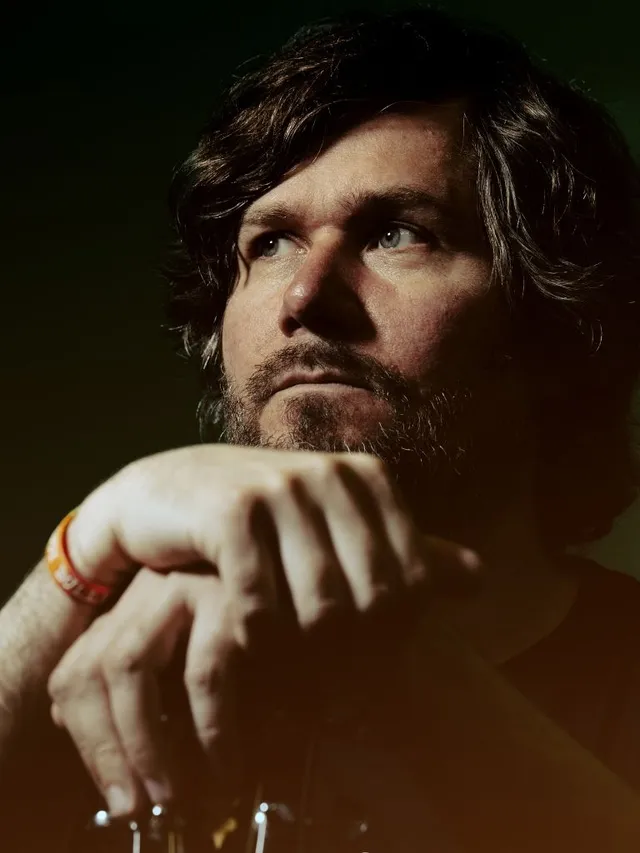
Anne: You're also planning to release "Fjord Noir" as a limited vinyl edition on September 18. As a vinyl lover myself, I am curious: what does the physical format mean to you, and is there a record in your own collection that shaped the way you think about albums?
Tony: Seeing as my formative years were spent in the age of CD, the physical format means the world to me. I don't have as much time for it these days as I would like, but there is something truly special about studying the album artwork and reading the lyrics on physical packaging while you listen to the music. It might just be nostalgia talking, but I don't think I would ever release an album without some sort of physical format to go along with it.
As far as a record that shaped the way I think about albums, I have one that changed my perspective on the physical format. When I first started touring Europe in my early twenties, we ended up at a wine-soaked afterparty at a promoter's house one night, and Orchid's self-titled album got put on. It was on vinyl, a format that I up until that point had thought of as kind of old-timey and obsolete, but this experience forced me to change my view completely. It sounded raw, organic and dangerous. When I got home from that tour, I sold my whole CD collection and invested that money in vinyl.
Anne: You recorded and mixed "Fjord Noir" at Piir Studio in Trondheim with Vebjørn Svanberg Numme, who also plays percussion on six of the tracks. What does he bring to the Velcro Dog universe, and how does working with him differ from being alone with your songs?
Tony: Recording with Vebjørn was an absolutely fantastic experience. He's incredibly attentive to detail, and we share a similar outlook on keeping the sound and takes as organic as possible. The songs were mostly already fleshed out when we started recording, but he contributed a lot of production ideas and basically shaped the whole sound of the album. The fact that he's a stellar drummer didn't hurt the process either.
I also want to give a shout-out to Samuel Lykkås, who runs Piir Studio with Vebjørn. He added some really sweet electric guitar ambience to a few tracks and also spearheaded the percussion recording sessions when Vebjørn was busy drumming.
Anne: Alan Douches, whose credits range from Sufjan Stevens to Chelsea Wolfe, mastered your album. How did this collaboration come about, and did you notice a moment where his mastering changed the way you heard your own songs?
Tony: I've worked with Alan on different projects throughout the years, and he did an excellent job on all of those, so it felt only natural to involve him with Velcro Dog as well. The process Alan and the other wizards of the mastering industry put music through is shrouded in mystery, but I'm sure it involves the casting of ancient spells, numerous dark rituals and gallons of virgin blood. Even though I'm a bit foggy around the exact details, I do know that the music ends up sounding dead professional every time Alan has worked his magic on it.
"Her edits are very rhythmical and musical"
Anne: Karen Gravås, who has worked on acclaimed productions like "Makta" and "Ninjababy", edited the video for "The Gonzo Futurist Manifesto". How did the two of you come together, and what did her perspective add to your original concept?
Tony: I'm fortunate to have Karen, who is an absolutely brilliant editor, as a sister-in-law. I've been dying to work with her for years, and the stars finally aligned for this video. Although she primarily does movies and TV shows and not music videos, she's a big music buff, and you can really tell because her edits are very rhythmical and musical. She blended the 8mm footage and the footage supplied by my extended family seamlessly with the black-and-white scenes of me that were shot by photographer extraordinaire Ida Muren Olsen.
Anne: You mentioned that the video juxtaposes old 8mm footage with new colourful clips. Where does that 8mm footage come from, and what was it like to watch it again through the lens of this song?
Tony: The footage is of Karen and her family from when she was growing up, so a lot of people that I care deeply about. I'm truly grateful that they let me use these beautiful clips.
Anne: If there was one thing in the world you could change, what would it be and why?
Tony: I would remove human arrogance, because believing that we possess qualities that somehow make us superior to other people and living things is solely a source of conflict and unnecessary destruction. The world would be a much more harmonious place, both on an individual and collective level, without it.
"I can't wait to come back to Germany"
Anne: With all the songs written for "Fjord Noir", release plans for September, the video out, and all the interviews and previews running, what's up next for you?
Tony: I will start touring heavily from October onwards, first in Norway throughout the winter, then I'll hit central Europe next year. I had some really great gigs in Germany last tour, so I can't wait to come back!
Anne: Once again: thanks for answering my questions! It's been a pleasure talking to you. Wishing you all the best for your plans!
Tony: Thank you for the fun interview. I really enjoyed the questions!
Velcro Dog - "I'll Stick to Fiction"
Velcro Dog - "Fjord Noir"
Tour Dates
- 2026-09-10 NO Trondheim, Crispin Glover Record Shop (in-store)
- 2026-10-02 NO Bodø, Kom heim
- 2026-10-03 NO Tromsø, Backbeat (in-store)
- 2026-10-03 NO Tromsø, Bastard
- 2026-10-09 NO Ringebu, Arnemoen Gard
- 2026-10-10 NO Trondheim, Antikvariatet
- 2026-10-15 NO Røros, Ungdommens Hus
- 2026-10-16 NO Tønsberg, Nidhoggs brønn
- 2026-10-17 NO Oslo, Salt
- 2026-11-13 NO Evanger, Rongahuset
- 2026-11-14 NO Bergen, Rocade (in-store)
- 2026-11-14 NO Bergen, Kolonialen
- 2026-11-20 NO Lindesnes, Lindesnes fyr
- 2026-11-21 NO Kristiansand, Kafé Krank
- 2026-02-13 NO Lesja, Lesja Bygdemuseum
Support services for depression
If you or someone close to you is affected by depression: you do not have to carry it alone. There are people who will listen, free of charge and, if you want, anonymously.
Wherever in the world you are reading this, Find A Helpline (findahelpline.com), a free service by the non-profit ThroughLine, points you to confidential support in your own country and language. You just enter where you are, and it finds a service near you, often by phone, chat or text, and much of it around the clock.
And if you want to support someone you love: you can take that first step together. Offer to dial the number with them, to sit beside them during the call, to help put a first message into words, or to come along to an appointment. Sometimes that simple "we can do this together" is exactly what makes reaching out possible at all.
Important: If things feel urgent and you or someone else might be in danger, please contact your local emergency number straight away.